
The Menopause Middle: Why Your Metabolism Changed and How to Eat (and Move) for Your New Hormonal Blueprint
“I’m doing everything the same, but my body is completely changing.”
As a nurse, this is one of the most frequent frustrations I hear. Women who have been runners their whole lives or who have always been “careful” with their diet suddenly find that the old rules no longer apply. The weight is shifting to the midline, energy levels are crashing, and the “willpower” that used to work has seemingly vanished.
I want to reassure you: This is not a failure of willpower. It is a shift in biochemistry. When oestrogen levels drop, your body undergoes a metabolic recalibration. If you try to fight this new blueprint with old-school “eat less, move more” tactics, your body will often fight back. Here is why your metabolism changed and how to work with your hormones instead of against them.
1. The Science: It’s Not Just Calories, It’s Insulin
Oestrogen plays a massive role in how your body handles sugar. As it declines, your cells can become less responsive to insulin (the hormone that mops up sugar from your blood).
The Mechanism: When you become “insulin resistant,” your body struggles to use carbohydrates for fuel and becomes much more efficient at storing them as fat—specifically visceral fat (the fat around your organs in the “middle”).
Furthermore, perimenopause often makes us more sensitive to cortisol (the stress hormone). If you do long, punishing cardio sessions or fast for too long, your cortisol spikes. High cortisol tells your body: “We are in a crisis—hold onto the belly fat for survival!”

2. The Nurse’s Nutritional Pillars for Perimenopause
To master the “Menopause Middle,” we have to stop “dieting” and start “fueling” for insulin sensitivity.
A. Prioritise Protein (The Muscle Anchor)
In your 40s and 50s, you begin to lose muscle mass naturally (a process called sarcopenia). Muscle is your metabolic engine; the less you have, the slower your metabolism.
- The Goal: Aim for 25–30g of protein at every meal. This keeps you full, stabilizes your blood sugar, and provides the building blocks for muscle repair.
B. Fibre and the “Estrobolome”
Your gut contains a specific set of bacteria called the estrobolome, which helps metabolise and clear oestrogen from your system. If your gut is sluggish, you can end up with “oestrogen dominance” symptoms.
- The Goal: Aim for 30g of fibre a day from a variety of sources to keep the “recycling system” moving.
C. Manage the “Spikes”
Large spikes in blood sugar often trigger worse hot flushes and night sweats.
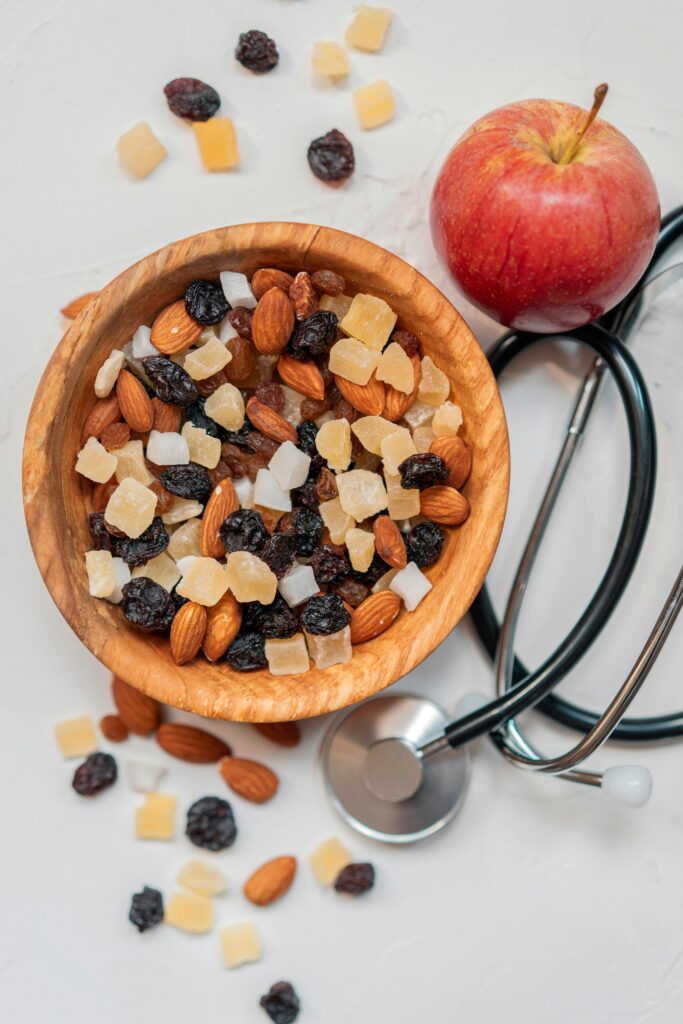
- The Tip: Always “clothe” your carbs. Never eat a piece of fruit or a biscuit on its own; pair it with a fat or a protein (like nuts or Greek yoghurt) to slow the sugar release.
3. Movement: Heavy and Short vs. Long and Slow
If you are exhausted and struggling with weight, stop the 10km runs for a moment. In perimenopause, your body responds much better to intensity and resistance than to endurance.
- Strength Training: Lifting weights is the “gold standard” for menopause. It improves insulin sensitivity and builds the muscle that burns fat while you sleep.
- HIIT (High-Intensity Interval Training): Short bursts of effort followed by rest are great for the heart, but keep them under 20-30 minutes to avoid the “Cortisol Trap.”
4. Taking Action: The Lifestyle Audit
You cannot exercise your way out of a hormonal shift, but you can eat and move in a way that supports your new biochemistry.

Ready to reset your metabolism? I’ve created a Hormone-First Lifestyle Audit. This is a 7-day deep dive into your current habits. It will help you identify if your current workouts are spiking your cortisol, if your protein intake is too low, and exactly what to change to start working with your body again.
[LINK: Download the Hormone-First Lifestyle Audit & Meal Planner Here]